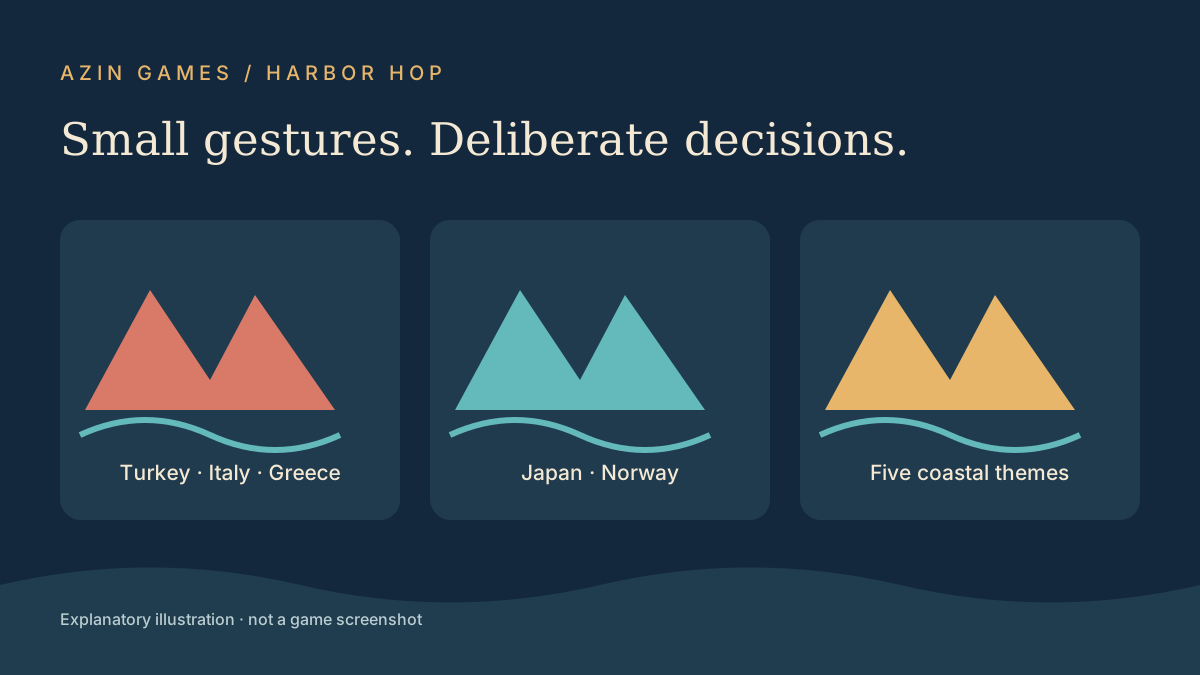
Harbor Hop names five coastal themes: Turkey, Italy, Greece, Japan and Norway. These are stylized settings for an arcade game, rather than a travel guide or a claim to reproduce real harbors. Their useful design question is simple: how can the background feel different while the player still reads the fish and crates?
Keep the game’s visual job clear
Fish move quickly. Crate colors and the balance state carry decisions. A background should frame those actions rather than compete with every moving object. Harbor Hop’s red, blue, yellow and green crates keep their game roles as the setting changes. The player should not have to relearn matching because the coast has changed.
Separate scenery from instruction
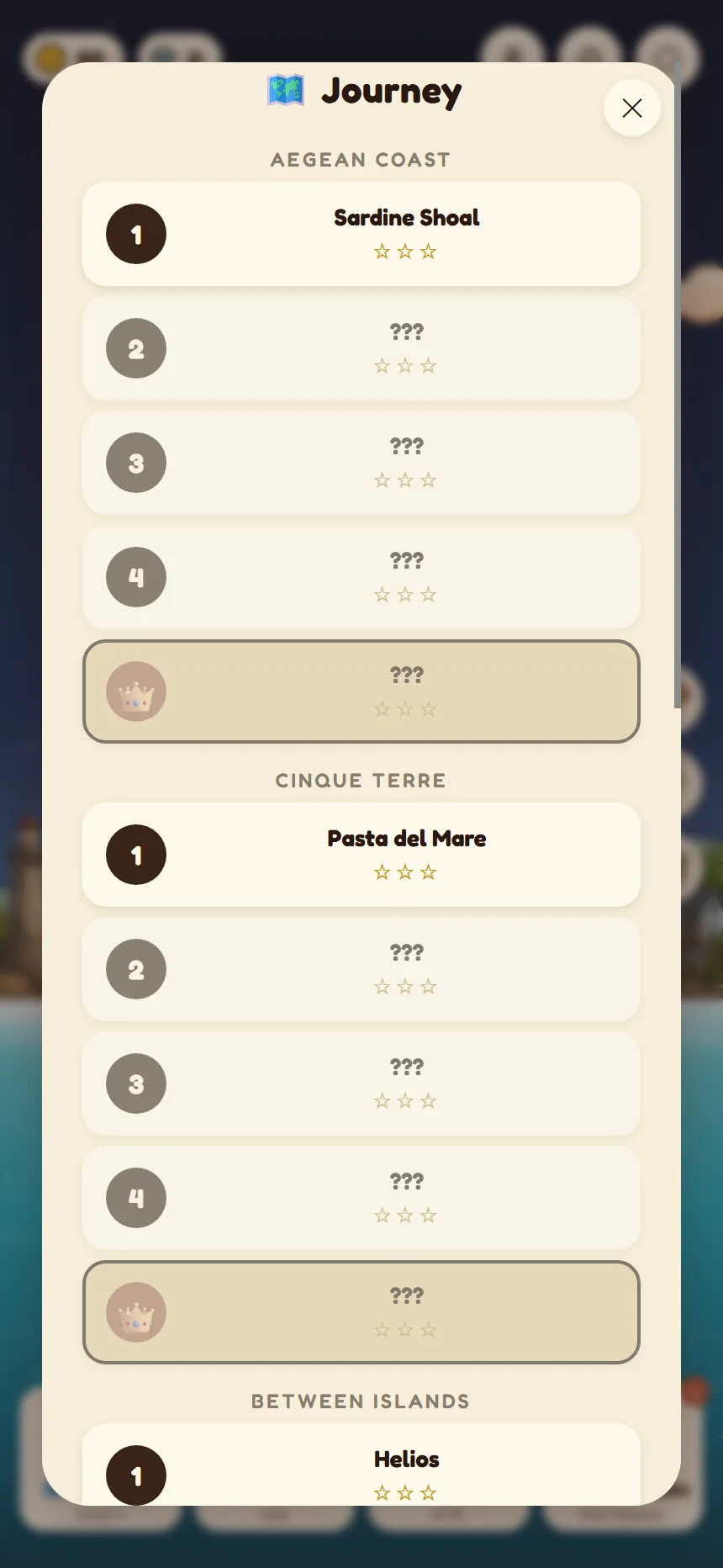
The illustrations in these guides explain rules with generous spacing and labeled shapes. They are not presented as in-game interfaces. The gameplay images are captured from the actual development build and are captioned accordingly. Keeping that distinction visible helps a reader know what the game looks like and what the article has added to teach it.
A quiet frame, a readable action
The AZIN website uses dark navy, warm paper tones, restrained gold and teal accents, with large editorial headings. These guides carry that frame into the blog while leaving game screenshots intact. The article palette is not a promise that every game scene uses the same colors. Its purpose is to make a long explanation easier to scan.
Read the game through one image
On a gameplay image, first locate the four crates. Then find an airborne fish and imagine the flight your swipe would create. Finally find the balance information. If you can explain those three elements, you are reading the essential loop. A scenic illustration alone cannot teach those relationships.
Follow the art back to play
Harbor Hop marketing also uses illustrative promotional material; it should be read as artwork rather than evidence of a playable feature. This article uses the real interface and original explanatory diagrams. For the rules behind the imagery, continue to the beginner guide or the balance explainer.
Put the idea into play
The Android public release is being prepared. The web version may show age and profile steps.
Open the web version ↗Explore Harbor Hop